You Don’t Have to Look Sick to Have an Eating Disorder
Eating disorders do not have a “look.”
During Eating Disorder Awareness Week (February 23 – March 1), it is important to talk about this truth – many people struggling are missed, dismissed, or misdiagnosed because they don’t fit the stereotype such as body size, weight, gender, personality type.
And yet, one of the most harmful sentences that clients hear that I work with as a dietitian specializing in eating disorders is this:
“But you don’t look like you have an eating disorder.”
Can You Have an Eating Disorder and Not Be Underweight?
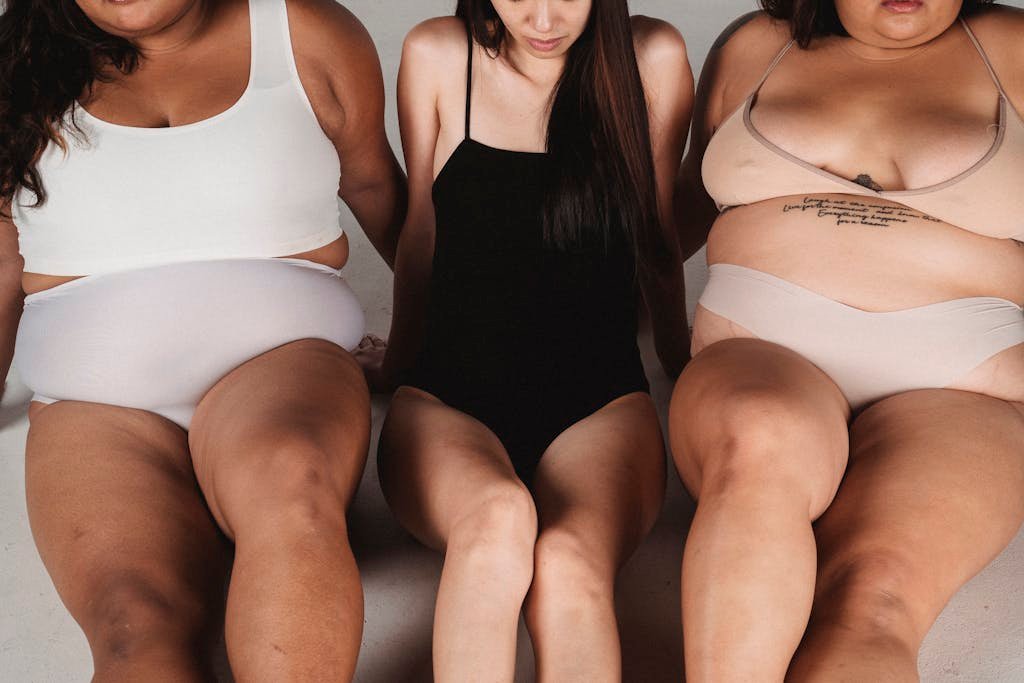
Simple answer: YES!
The stereotype is truly wrong. When many people picture someone with an eating disorder, they imagine extreme thinness. This image is heavily tied to portrayals of anorexia nervosa in media.
But eating disorders include:
- Binge-eating disorder (BED)
- Bulimia nervosa
- Avoidant/restrictive food intake disorder (ARFID)
- Other specified feeding or eating disorder (OSFED)
And they affect people in all body sizes.
In fact, research consistently shows that people in larger bodies are less likely to be diagnosed with an eating disorder — even when symptoms are severe — because weight stigma clouds clinical judgment.
You cannot diagnose an eating disorder by looking at someone.
What Is Atypical Anorexia Nervosa?
Ok this is a question I hear a lot and this term does annoy the hell out of me…why?

The simple definition of atypical anorexia nervosa is the same characteristics of anorexia nervosa except for low body weight.
Medical complications can be just as severe.
- Bradycardia
- Hormonal disruption
- Bone density loss
- Gastrointestinal distress
- Anxiety and depression
- Suicidality
The body does not care what category you fit into
Starvation impacts systems regardless of starting weight!
Who Gets Missed?

The truth is: many groups are under-diagnosed.
- People in larger bodies
- Men and boys
- People of color
- Adults over 30
- High-achieving professionals
- Parents
- Athletes
I applaud The Pitt addressing this topic in Season 2, Episode 3; which aired on January 29th, 2026. If you have not seen it then check it out.
Eating disorders thrive in silence — especially when someone “looks fine.”
High-Functioning Eating Disorders Are Still Serious

Many of my clients:
- Go to work
- Care for families
- Show up socially
- Exercise regularly
- Smile in public
Internally, they are exhausted by food rules, guilt, body checking, and fear of losing control.
You can be high-performing and deeply unwell at the same time.
I Don’t Look Sick — Am I Sick Enough for Help?

When someone hears “You don’t look sick,” what they often internalize is:
- “Maybe I’m not sick enough”
- “I should restrict more”
- “I don’t deserve help”
- “I need to get worse before I ask for support”
This belief delays recovery.
And eating disorders are illnesses that worsen over time without treatment.
Early intervention dramatically improves outcomes. But early intervention only happens when we stop relying on appearance as a screening tool.
Eating Disorder Awareness Week
Why This Conversation Matters
Awareness is not just about statistics.
It’s about changing how we respond when someone says:
“I’m struggling.”
It’s about:
- Believing people.
- Asking better questions.
- Screening beyond BMI.
- Understanding that health is not visible.
- Reducing stigma.
And most importantly — it’s about reminding anyone reading this:
If you are struggling with food, your body, or your relationship with eating…
You do not have to prove your suffering by shrinking.
You do not have to hit a certain weight to deserve support.
You do not have to look sick to be sick.
And you absolutely deserve help.
Remember, recovery is not linear; you deserve the help where you are in your recovery.
If you or someone you love is struggling, reaching out to an eating disorder–informed provider can make a profound difference.
Recovery is possible — at every size.
Looking For Support?
If reading this brings up questions—or you are wanting support that goes beyond general education—you don’t have to navigate that alone.